Helmet fit guide: Why proper adjustment matters 96%
"It is important that a helmet fit the cyclist properly."
Ensuring a proper bike helmet fit adjustment is essential for head protection during various riding scenarios. This guide covers why positioning matters, how to achieve a secure fit, and how environmental factors influence safety.
Key takeaways include the critical importance of correct sizing, the impact of road clearance on cyclist safety, and the necessity of adjusting gear for different riding conditions.
Why does bike helmet fit adjustment matter?

A cyclist pulls the chin strap tight and settles the foam against their forehead. While many assume wearing a helmet provides total security, a loose or poorly positioned shell offers little protection during an impact.
The necessity of a proper fit is underscored by historical data regarding user error. In one study involving children and adolescents aged 4 to 18 years, 96% were found to be incorrectly fitted.
This high percentage of improper use suggests that simply wearing a helmet is not enough to guarantee safety.
Effective bike helmet fit adjustment ensures the protective shell sits at the correct height and angle to absorb energy. Without this adjustment, the helmet may slide during a collision, leaving the wearer vulnerable. Proper placement remains the foundation of effective personal protection.
How does helmet position matters during a ride?
A rider adjusts the side straps and checks the visor visibility before pedaling into traffic. Maintaining the right balance between coverage and visibility is a constant task for active cyclists.
The way a helmet sits on the head can change the perceived space around the cyclist. One study by Walker in England found that 2,500 vehicles passed a helmeted cyclist with measurably less clearance (8.5 cm less) than that given to the same cyclist unhelmeted.
This finding highlights how helmet volume and position can affect the spatial relationship between a rider and passing vehicles.
Understanding how helmet position matters helps riders manage their own visibility and the space they occupy. While the study noted a difference in clearance, it is vital to ensure the helmet remains secure regardless of the perceived space.
Adjusting the fit to prevent shifting is a primary safety goal.
What are the steps for adjusting helmet fit?
A cyclist stands before a mirror, tightening the rear dial and checking the forehead coverage. Following a systematic approach ensures the equipment is ready for the road.
To achieve a secure fit, follow these three steps:
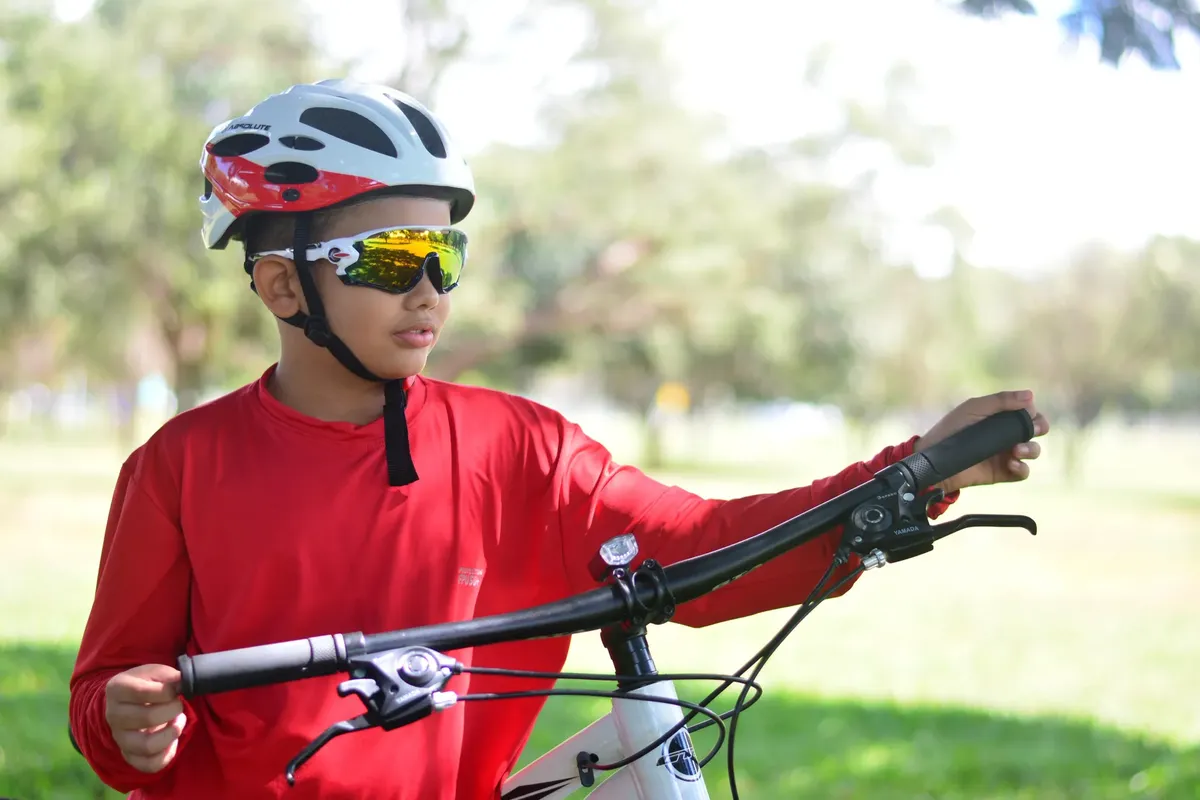
- Position the helmet so it sits level on the head, covering the forehead. 2. Tighten the rear adjustment dial to wrap the internal cradle snugly around the skull. धा3. Secure the chin strap so that only a small amount of slack remains when the mouth is open.
After completing these steps, perform a final check by shaking the head gently to ensure the helmet does not slide. I found that checking the side straps for symmetry was the most helpful part of my own routine.
A limitation to this process is that a helmet designed for an adult may not provide adequate coverage for a child, regardless of how much it is adjusted.
- Tighten or loosen the adjustment dial to secure the fit around the head. 2. Position the helmet so it sits level on the forehead. 3. Check that the chin strap is snug against the jaw.
How do helmet use scenarios change the adjustment?
A commuter pulls a helmet from a bag and tights the straps while preparing for a city ride. A mountain biker adjusts the ventilation and secures the chin strap more tightly before hitting a trail.
Different activities require different approaches to helmet use scenarios. For example, high-speed road cycling might require a more aerodynamic position, while mountain biking might necessitate more coverage toward the back of the head.
| Scenario | Primary Adjustment Focus |
|---|---|
| Urban Commuting | Stability and visibility |
| Trail Riding | Impact coverage and ventilation |
The table above compares common focus areas. While the specific needs change, the goal of maintaining a secure fit remains constant. Adjusting for the specific environment helps manage both comfort and safety.
How can we ensure safety based on ride conditions?
A cyclist looks at the weather and the road surface before tightening the helmet straps one last time. Preparing for the environment is just as important as the gear itself.

When planning for safety based on ride conditions, riders must account for temperature and terrain. In hot weather, the adjustment might prioritize ventilation, whereas colder climates might require thicker padding or different strap management.
If the riding environment involves heavy traffic, maintaining a clear field of vision is paramount. This means ensuring the helmet does not sit too low on the forehead, which could obstruct the view of the road ahead. Constant vigilance and minor adjustments throughout a ride can prevent accidents.
- Why does bike helmet fit adjustment matter?
- How does helmet position matters during a ride?
- What are the steps for adjusting helmet fit?
This part also covers Fit guide for cycling.
Related
- Bike touring safety gear guide: ISO 559 wheels are best
- Helmet cleanliness guide: Protect your ride with these tips
When should the helmet be adjusted during a ride?
A cyclist should check the helmet fit during the ride if they feel any movement or discomfort. Minor shifts in the helmet suggest the initial adjustment may not be holding firm against vibrations or impacts. This constant minor correction contributes to sustained protection.
If the ride conditions change significantly, the helmet may need re-evaluation. For instance, transitioning from a calm neighborhood ride to high-speed traffic requires confirming the helmet's positional integrity.
The important helmet adjustment ensures the protective qualities remain present throughout the entire journey.
What are potential risks of poor helmet fitting?
A helmet that is not fitting correctly increases the risk of inadequate energy absorption during a sudden stop. If the helmet slides, the intended protective function of the important helmet is compromised. This movement renders the device largely ineffective when needed most.
The initial finding that 96% of young riders were incorrectly fitted underscores the danger of assuming a helmet alone guarantees safety. A poor fit means the helmet moves with the head during an impact, negating its ability to cushion the blow.
Therefore, the helmet must fit properly to fulfill its protective role.
Wikipedia: Citi Bike (full) Based on the retained excerpt mentioning New York City Department of Transportation: First proposed in 2008 by the New York City Department of Transportation, Citi Bike's scheduled 2011 opening was delayed by Hurricane Sandy and technological problems.






Comments 0